
Function Declarations and Parameters
In short: a function packages a block of code under a name, so you can
run it again from anywhere with name(...). Parameters are the named
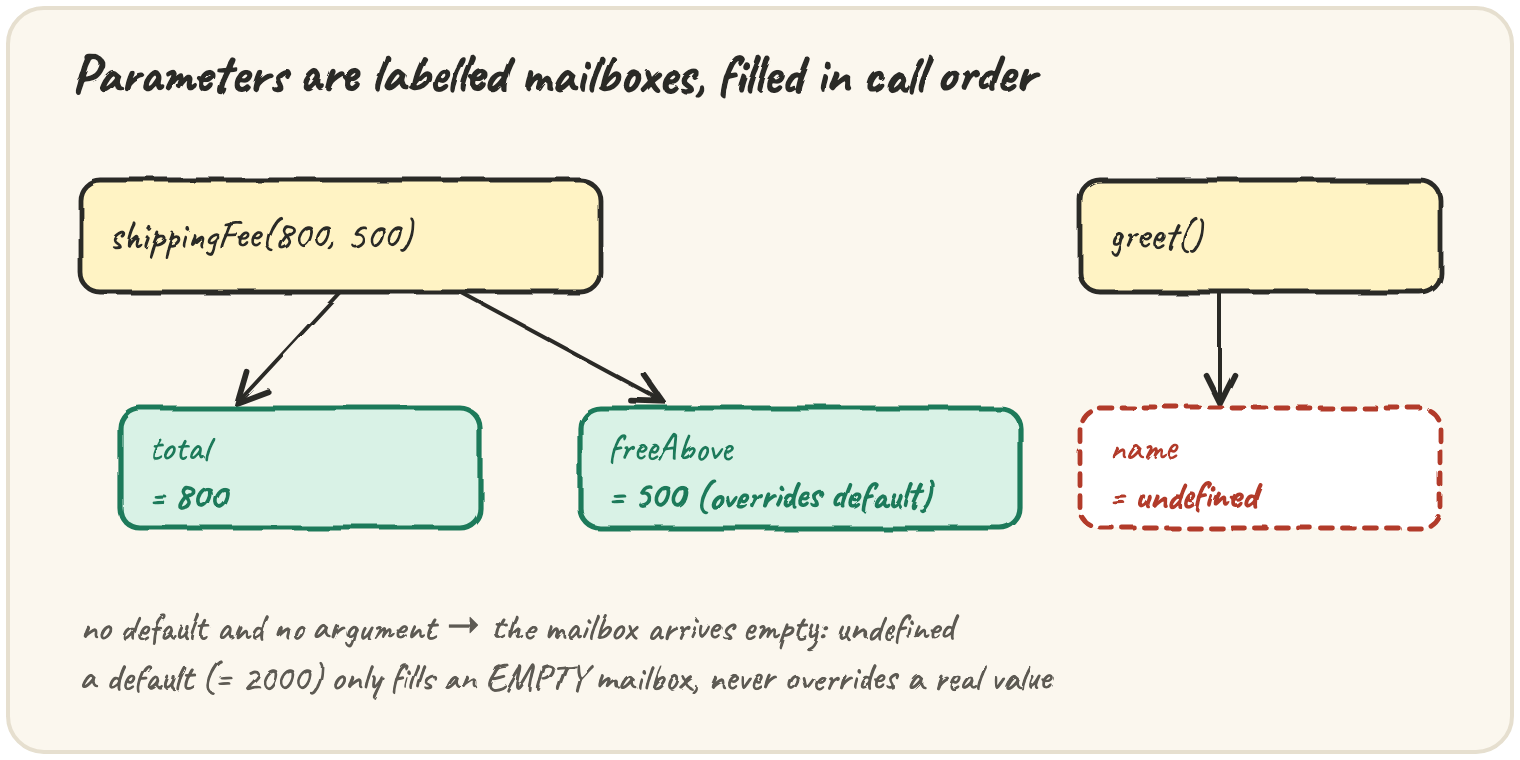
mailboxes a function declares; arguments are what a particular call
drops into them, filled in order. Give fewer arguments than parameters and
the leftover mailboxes hold undefined. A default value
(param = value) only fills a mailbox that's exactly undefined — it
never overrides a real value, even a falsy one like 0.
A shipping fee with a configurable threshold
Parameters can have defaults, used only when a call leaves them out:
shippingFee(2500) only fills total — freeAbove stays undefined
until the default 2000 steps in. Pass a second argument, and it fills
that mailbox directly; the default is never consulted.
A missing argument, and an ignored extra one
Call a function with too few or too many arguments, and JavaScript doesn't complain — it just leaves gaps or drops the extras:
greet() gives name no value at all, so it's undefined, and the
message prints "Hello, undefined" — no error. add(2, 3, 999) only has
two parameters, so 999 is simply never read; JavaScript never enforces
argument count.
The default-value trap: 0 isn't "missing"
The rule that catches people: a default only fires for undefined, not
for other falsy values.
setVolume(0) passes a genuine value — 0 — so the default is skipped
entirely and the function returns 0. Only a missing argument, or one
explicitly passed as undefined, triggers the default. This is different
from ||-based fallbacks (level || 50), which would wrongly replace a
real 0 — exactly the trap from the type-casting lessons.
Quick practice
function f(a, b) { return a; } — what does f(5) return, and what is b?
function f(x = 10) { return x; } — what does f(0) return?
function f(x = 10) { return x; } — what does f() return?